

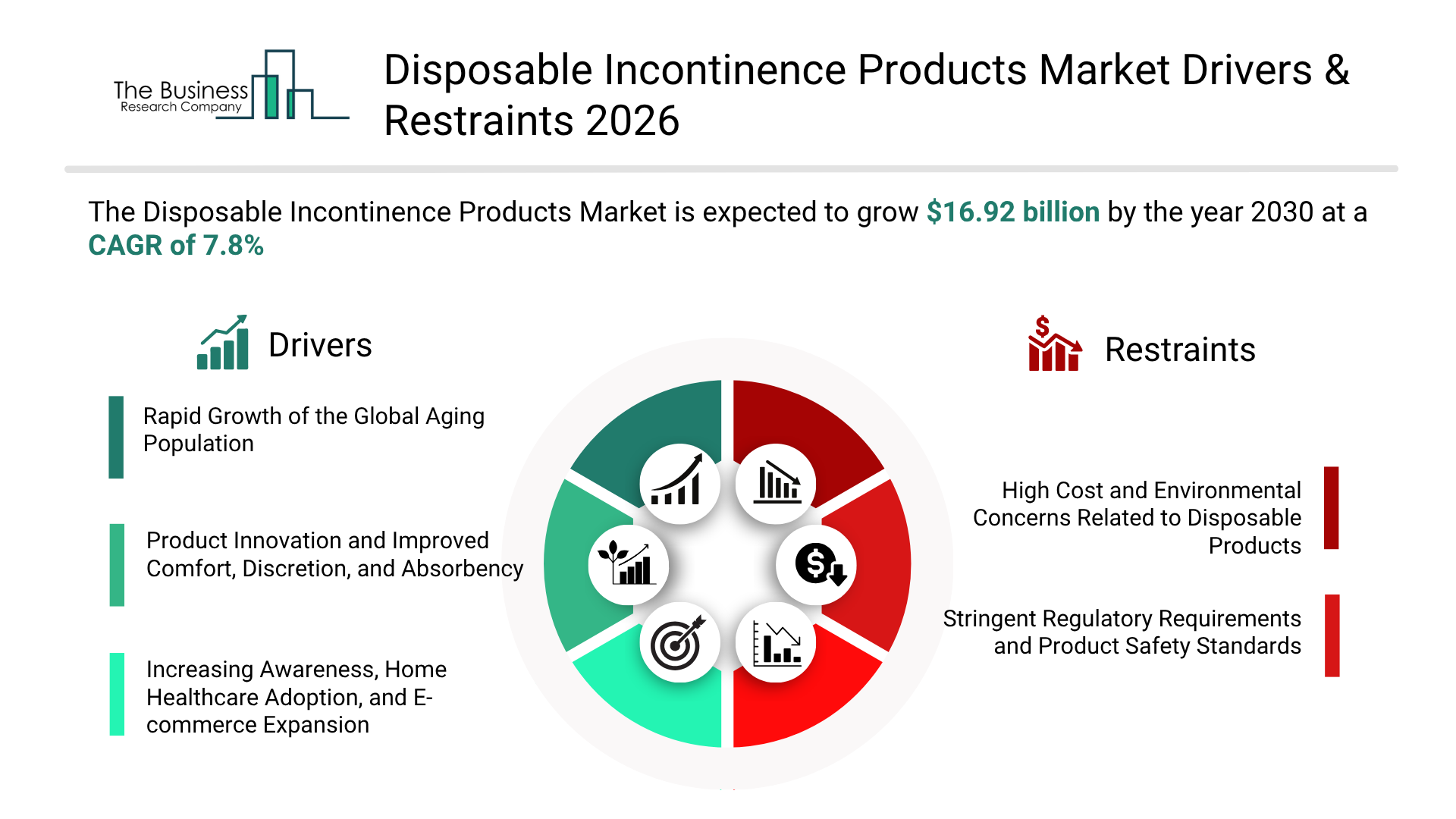
Disposable Incontinence Products Market CAGR to be at 7.8% from 2026 to 2030 | $16.92 Billion Industry Revenue by 2030
Disposable Incontinence Products Market Report
Disposable Incontinence Products Market Report
Disposable Incontinence Products Market Report
The Business Research Company’s Disposable Incontinence Products Global Market Report 2026 – Market Size, Trends, And Forecast 2026-2035
LONDON, GREATER LONDON, UNITED KINGDOM, April 25, 2026 /EINPresswire.com/ -- Disposable Incontinence Products market to surpass $17 billion in 2030. In comparison, the Other Plastics Product market, which is considered as its parent market, is expected to be approximately $819 billion by 2030, with Disposable Incontinence Products to represent around 2% of the parent market. Within the broader Paper, Plastics, Rubber, Wood And Textile industry, which is expected to be $10,239 billion by 2030, the Disposable Incontinence Products market is estimated to account for nearly 0.2% of the total market value.
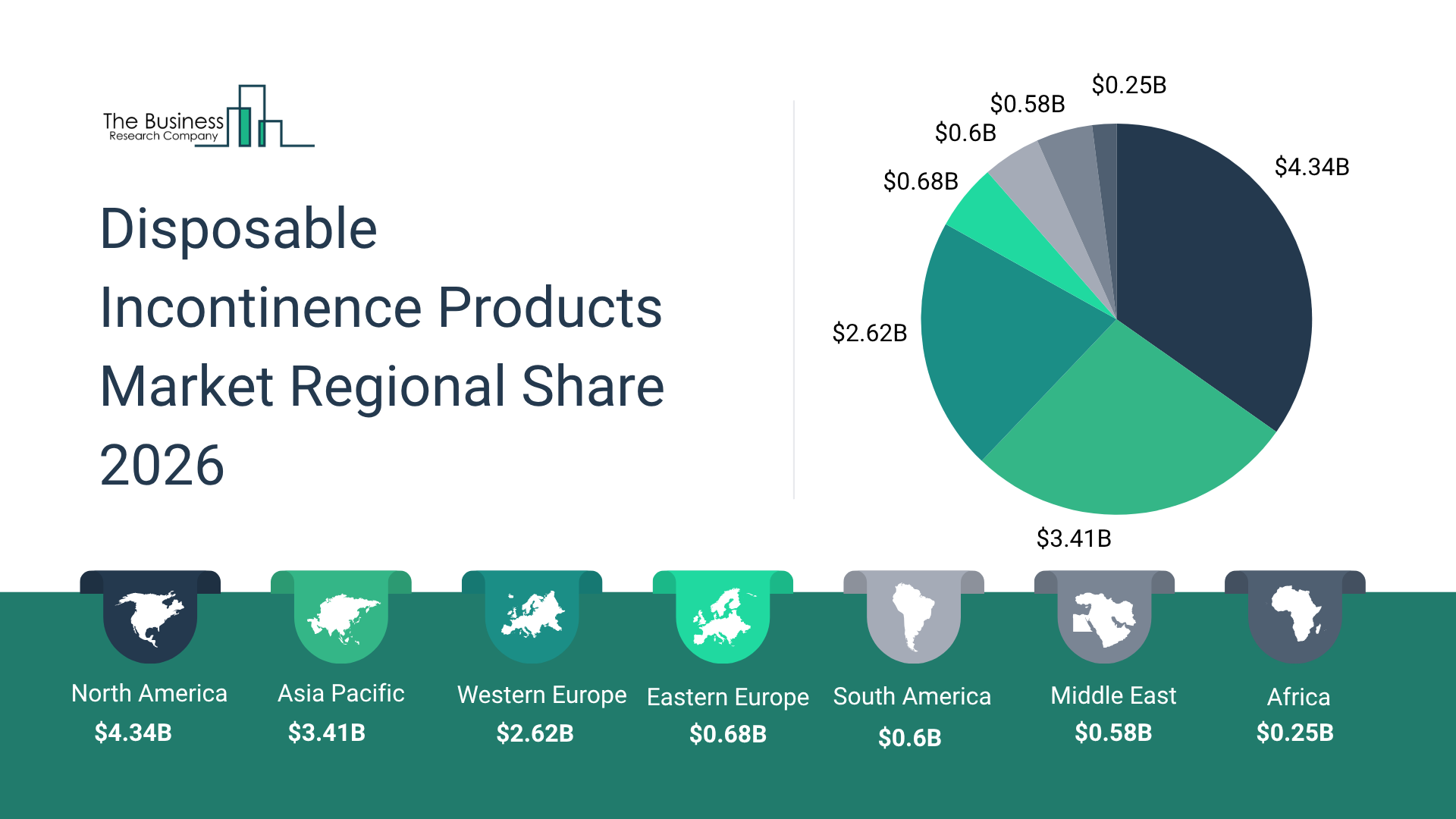
Which Will Be The Biggest Region In The Disposable Incontinence Products Market In 2030?
North America will be the largest region in the disposable incontinence products market in 2030, valued at $6 billion. The market is expected to grow from $4 billion in 2025 at a compound annual growth rate (CAGR) of 7%. The strong growth can be attributed to the rising aging population, increasing prevalence of urinary incontinence among adults, growing awareness about personal hygiene and continence care, strong presence of leading healthcare and personal care product manufacturers, expanding availability of advanced absorbent hygiene products, and increasing adoption of home healthcare and long-term care services across countries such as the USA and Canada.
Which Will Be The Largest Country In The Global Disposable Incontinence Products Market In 2030?
The USA will be the largest country in the disposable incontinence products market in 2030, valued at $5 billion. The market is expected to grow from $3 billion in 2025 at a compound annual growth rate (CAGR) of 7%. The strong growth can be attributed to the rapidly aging population and increasing prevalence of urinary incontinence among elderly individuals, rising awareness about personal hygiene and incontinence management, growing demand for convenient and discreet hygiene solutions, expanding availability of advanced absorbent and skin-friendly products, strong presence of leading hygiene product manufacturers, and increasing healthcare expenditure supporting long-term and home-based care across the country.
Request A Free Sample Of The Disposable Incontinence Products Market Report
https://www.thebusinessresearchcompany.com/sample_request?id=10291&type=smp&utm_source=EINPresswire&utm_medium=Paid&utm_campaign=Apr_PR
What Will Be The Largest Segment In The Disposable Incontinence Products Market In 2030?
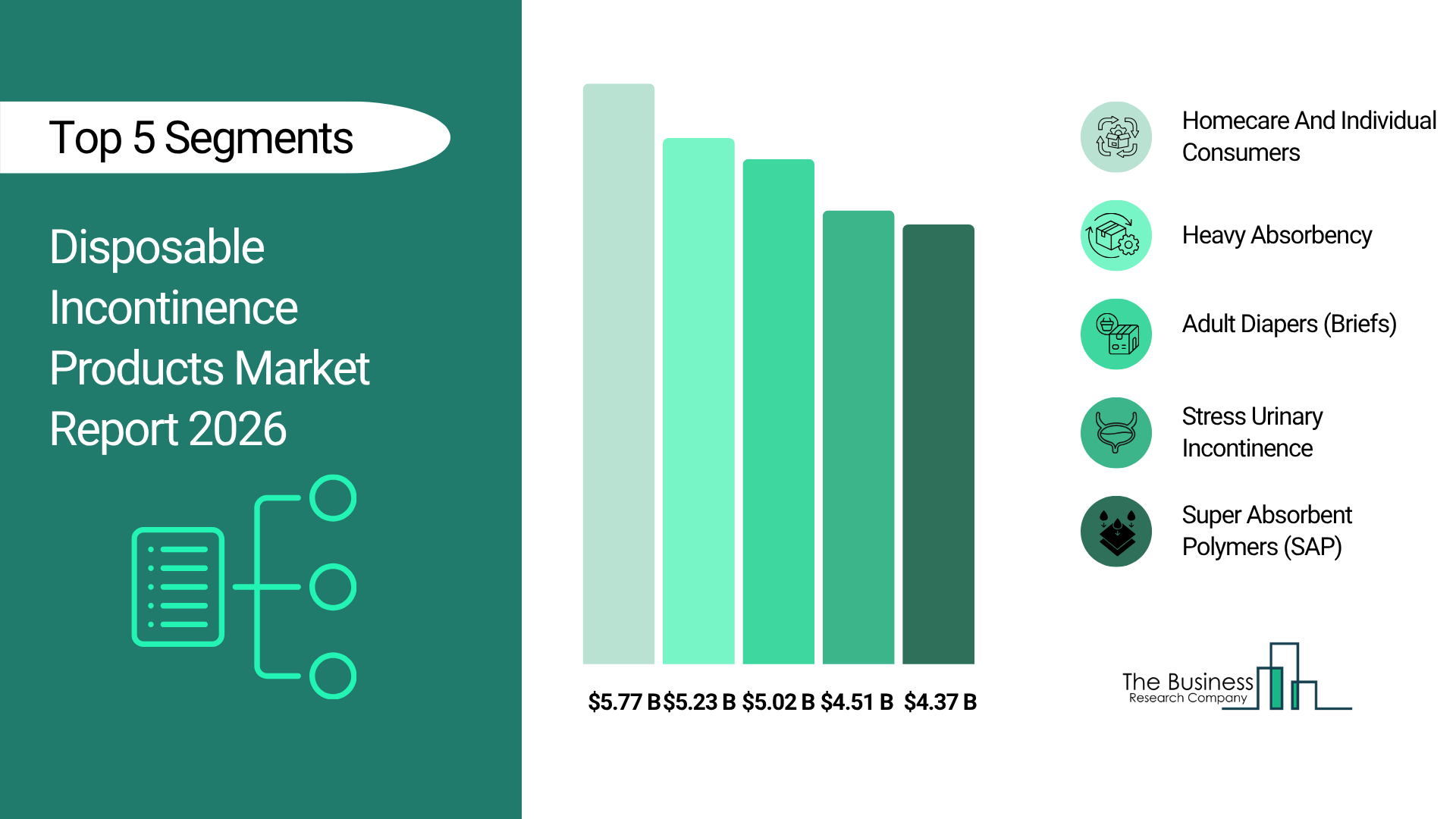
The disposable incontinence products market is segmented by product type into adult diapers (Briefs), disposable protective underwear (Pull-Ups), incontinence pads and liners, underpads and other types. The adult diapers (Briefs) market will be the largest segment of the disposable incontinence products market segmented by product type, accounting for 40% or $7 billion of the total in 2030. The adult diapers (Briefs) market will be fueled by the increasing adoption of disposable incontinence products by the aging population, rising prevalence of urinary incontinence and chronic health conditions, growing awareness and acceptance of incontinence care products, advancements in absorbent and skin-friendly materials improving comfort and hygiene, expanding availability through retail and e-commerce channels, and increasing healthcare support for long-term and home-based patient care.
The disposable incontinence products market is segmented by absorbency level into light absorbency, moderate absorbency, and heavy absorbency. The heavy absorbency market will be the largest segment of the disposable incontinence products market segmented by absorbency level, accounting for 43% or $7 billion of the total in 2030. The heavy absorbency market will be supported by the increasing adoption of disposable incontinence products by the increasing adoption of disposable incontinence products by the growing elderly population, rising prevalence of urinary incontinence and chronic health conditions, increasing awareness and acceptance of personal hygiene products, advancements in high-absorbency and skin-friendly product technologies, expanding availability through retail and e-commerce channels, and supportive healthcare initiatives promoting improved elderly care and patient comfort.
The disposable incontinence products market is segmented by incontinence type into stress urinary incontinence, urge urinary incontinence, overflow incontinence, functional incontinence, fecal incontinence, and dual incontinence. The stress urinary incontinence market will be the largest segment of the disposable incontinence products market segmented by incontinence type, accounting for 36% or $6 billion of the total in 2030. The stress urinary incontinence market will be supported by the increasing adoption of disposable incontinence products by aging populations, rising prevalence of urinary incontinence among women and elderly individuals, growing awareness about personal hygiene and continence care, expanding availability of discreet and highly absorbent product innovations, increasing demand for convenient single-use hygiene solutions, and growing healthcare and caregiver support for effective incontinence management.
The disposable incontinence products market is segmented by material type into super absorbent polymers (SAP), nonwoven fabrics, fluff pulp, plastic back sheets, bio-based and sustainable materials, and other materials. The super absorbent polymers market will be the largest segment of the disposable incontinence products market segmented by material type, accounting for 36% or $6 billion of the total in 2030. The super absorbent polymers market will be supported by the increasing adoption of disposable incontinence products by the growing elderly population, rising prevalence of urinary incontinence and chronic health conditions, increasing demand for highly absorbent and leak-proof hygiene solutions, advancements in super absorbent polymer technology enhancing fluid retention capacity, expanding availability of adult diapers and hygiene products through retail and e-commerce channels, and growing awareness regarding personal hygiene and long-term care management.
The disposable incontinence products market is segmented by end user into homecare and individual consumers, hospitals, nursing homes, long-term care facilities, and other healthcare facilities. The homecare and individual consumers market will be the largest segment of the disposable incontinence products market segmented by end user, accounting for 46% or $8 billion of the total in 2030. The homecare and individual consumers market will be driven by the increasing adoption of disposable incontinence products by the aging population managing incontinence at home, rising preference for convenient and hygienic personal care solutions, growing awareness about urinary incontinence management, increasing availability of discreet and skin-friendly disposable products, expanding e-commerce and retail distribution channels, and the shift toward home-based healthcare and self-care practices.
What Is The Expected CAGR For The Disposable Incontinence Products Market Leading Up To 2030?
The expected CAGR for the disposable incontinence products market leading up to 2030 is 8%.
What Will Be The Growth Driving Factors In The Global Disposable Incontinence Products Market In The Forecast Period?
The rapid growth of the global disposable incontinence products market leading up to 2030 will be driven by the following key factors that are expected to reshape elderly care practices, personal hygiene management solutions, healthcare product innovation, and the broader global absorbent hygiene industry.
Rising Global Aging Population And Longevity - The rapid expansion of the global aging population is anticipated to be a major driver fueling the growth of the disposable incontinence products market by 2030. With increasing life expectancy worldwide, particularly in developed regions, the number of individuals requiring long-term incontinence care is steadily rising. Moreover, the prevalence of chronic conditions such as kidney disorders and neurological diseases is further elevating product dependency. This demographic transition ensures consistent and predictable demand across both institutional and homecare environments. As a result, the growing aging population is expected to contribute approximately 2.8% annual growth to the market.
Product Innovation And Improved Comfort, Discretion, And Absorbency – Product innovation focusing on enhanced comfort, discretion, and absorbency is projected to be a key factor driving the expansion of the disposable incontinence products market by 2030. Ongoing advancements such as ultra-thin materials, superior absorbent polymers, odor control technologies, and skin-friendly fabrics are significantly improving user experience. These developments help reduce stigma and promote adoption among active individuals beyond bedridden patients. Additionally, innovations including gender-specific designs, smart diapers, and eco-friendly materials are broadening the consumer base. Consequently, such innovation-led advancements are expected to contribute around 2.3% annual growth to the market.
Increasing Awareness, Home Healthcare Adoption, And E-commerce Expansion - Rising awareness, growing adoption of home healthcare, and the expansion of e-commerce platforms are expected to act as significant growth catalysts for the disposable incontinence products market by 2030. Increased understanding of hygiene and incontinence management, coupled with greater acceptance of home-based care, is driving higher product usage globally. The availability of discreet online purchasing options has further minimized social stigma associated with these products. In addition, favorable reimbursement frameworks and caregiver support initiatives in several regions are improving accessibility. Therefore, these rising awareness, growing adoption of home healthcare, and the expansion of e-commerce platforms are projected to contribute approximately 1.9% annual growth to the market.
Access The Detailed Disposable Incontinence Products Market Report Here
https://www.thebusinessresearchcompany.com/report/disposable-incontinence-products-global-market-report?utm_source=EINPresswire&utm_medium=Paid&utm_campaign=Apr_PR
What Are The Key Growth Opportunities In The Disposable Incontinence Products Market in 2030?
The most significant growth opportunities are anticipated in the adult diapers (briefs) market, the disposable protective underwear (Pull-Ups) market, the incontinence pads and liners market, the underpads market, and the other types market. Collectively, these segments are projected to contribute over $5.7 billion in market value by 2030, driven by the rapidly growing aging population and rising prevalence of urinary incontinence conditions, increasing awareness regarding personal hygiene and incontinence management, expanding availability of discreet and skin-friendly disposable products, continuous product innovations in absorbent materials and odor-control technologies, and the rising demand for home healthcare and long-term care services. This surge reflects the growing focus on improving patient comfort, maintaining dignity and independence among elderly individuals, and strengthening caregiving support systems, thereby accelerating demand across healthcare institutions, assisted living facilities, and home-based care settings.
The adult diapers (briefs) market is projected to grow by $2 billion, the disposable protective underwear (Pull-Ups) market is projected to grow by $2 billion, the incontinence pads and liners market is projected to grow by $1 billion, the underpads market is projected to grow by $0.5 billion, and the other types market is projected to grow by $0.2 billion over the next five years from 2025 to 2030.
Learn More About The Business Research Company
The Business Research Company (www.thebusinessresearchcompany.com) is a leading market intelligence firm renowned for its expertise in company, market, and consumer research. We have published over 17,500 reports across 27 industries and 60+ geographies. Our research is powered by 1,500,000 datasets, extensive secondary research, and exclusive insights from interviews with industry leaders.
We provide continuous and custom research services, offering a range of specialized packages tailored to your needs, including Market Entry Research Package, Competitor Tracking Package, Supplier & Distributor Package and much more.
Disclaimer: Please note that the findings, conclusions and recommendations that TBRC Business Research Pvt Ltd delivers are based on information gathered in good faith from both primary and secondary sources, whose accuracy we are not always in a position to guarantee. As such TBRC Business Research Pvt Ltd can accept no liability whatever for actions taken based on any information that may subsequently prove to be incorrect. Analysis and findings included in TBRC reports and presentations are our estimates, opinions and are not intended as statements of fact or investment guidance.
Contact Us:
The Business Research Company
Americas +1 310-496-7795
Europe +44 7882 955267
Asia & Others +44 7882 955267 & +91 8897263534
Email: info@tbrc.info
Follow Us On:
LinkedIn: https://in.linkedin.com/company/the-business-research-company
Oliver Guirdham
The Business Research Company
+44 7882 955267
info@tbrc.info
Visit us on social media:
LinkedIn
Facebook
X
Legal Disclaimer:
EIN Presswire provides this news content "as is" without warranty of any kind. We do not accept any responsibility or liability for the accuracy, content, images, videos, licenses, completeness, legality, or reliability of the information contained in this article. If you have any complaints or copyright issues related to this article, kindly contact the author above.
