The Next Generation of Heat Exchange: Innovations from China Best Fin Press Machine Supplier for Smart Manufacturing
NANTONG, JIANGSU, CHINA, June 24, 2026 /EINPresswire.com/ -- The traditional landscape of heat exchanger manufacturing is undergoing a profound digital transformation. As global energy costs rise and regulatory pressures for higher energy ratings intensify, the focus has shifted from mere mechanical output to intelligent, data-driven efficiency. For global HVAC and refrigeration procurement teams, the search for the China Best Fin Press Machine Supplier now leads beyond the simple assembly of hardware to partners who can integrate their production lines into a smart manufacturing ecosystem. In this new era, market leaders define their value through the combination of high-speed mechanical stability and intelligent sensing. Leading exporters now provide the technical bridge between theoretical thermal designs and real-world industrial performance.
From Mechanical Speed to Intelligent Performance: A Paradigm Shift
In the shadow of a global energy crisis, raw stamping speed is no longer the sole metric of success for fin production. Historically, factories prioritized strokes per minute as the primary indicator of a machine's value. However, modern manufacturing environments demand a more holistic approach centered on "smart capacity." This shift acknowledges that high-speed operation is only effective when accompanied by extreme precision and minimal downtime. Consequently, intelligent manufacturing capability has emerged as the new core criterion for evaluating equipment suppliers.
Smart manufacturing involves the seamless integration of hardware with digital monitoring systems. When a supplier prioritizes this integration, they allow factory managers to transition from reactive maintenance to predictive optimization. High-performance machinery now acts as a data node within the factory, providing insights into material usage and component wear. This evolution ensures that production remains stable even as global standards for energy efficiency become more stringent. By focusing on these intelligent attributes, modern suppliers help global brands maintain a competitive edge in an increasingly automated world.
Deconstructing High Performance: The P-300 and P-450 Series
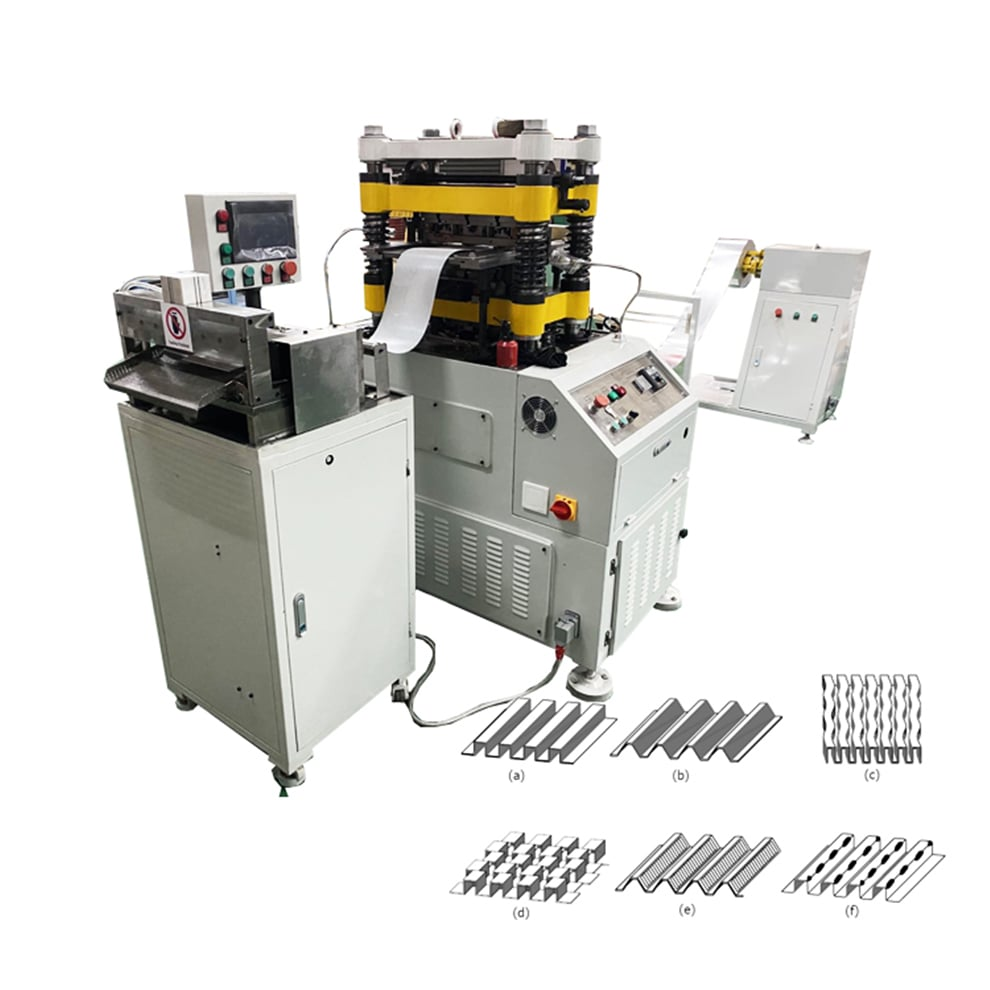
The technical pinnacle of this intelligent shift is found in advanced stamping systems like the P-300 and P-450 models. These machines operate at high speeds ranging from 200 to 300 strokes per minute, yet they maintain a level of stability previously reserved for slower equipment. The secret lies in a closed-loop dynamic monitoring system. During continuous operation, friction and kinetic energy inevitably generate heat, which causes mechanical components to expand slightly. Even a microscopic change in the die position can ruin the thermal profile of a cooling fin.
To combat this, the P-series utilizes sophisticated sensors to monitor thermal deformation in real-time. The control system automatically compensates for these changes, maintaining a fin precision tolerance of plus or minus 0.02mm. This level of accuracy is essential for producing high-efficiency "Louver" fins, where the angle and height of every slit must be identical to ensure optimal airflow. Without this real-time compensation, the quality of the fins would drift throughout a production shift. By stabilizing the output at a micron level, these machines ensure that every heat exchanger core performs exactly as the engineers intended during the design phase.
The Modular Revolution: Solving the Challenge of SKU Proliferation
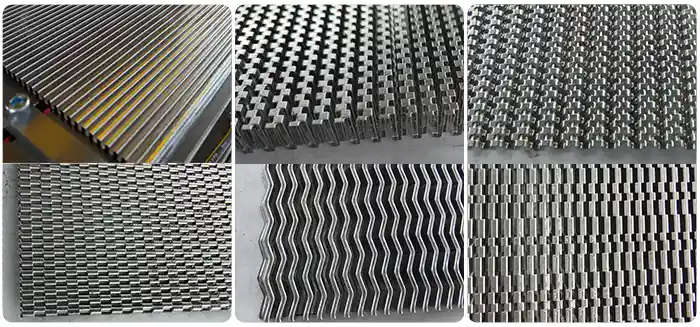
The modern consumer market demands a vast array of air conditioning and refrigeration products, each requiring unique fin patterns. This proliferation of stock-keeping units (SKUs) presents a significant challenge for traditional, rigid manufacturing lines. Changing a die set in a standard press can often take several hours of unproductive downtime. To address this, elite manufacturers have introduced Quick Die Change systems. These modular designs allow operators to switch between different fin geometries—such as wavy, louvered, or slit patterns—with unprecedented speed.
This modular flexibility has proven transformative for global tier-one clients like Siemens and B/S/H. By implementing these rapid changeover systems, factories have successfully reduced their downtime by up to 60%. Such agility allows manufacturers to adopt just-in-time production strategies, reducing their inventory of finished components while remaining responsive to shifting market demands. The ability to handle diverse product requirements on a single line significantly improves the return on investment for the machinery. It also ensures that the production facility remains future-proof as new heat exchanger designs emerge.
Algorithm Breakthroughs at the Material Frontier
As the industry moves toward ultra-thin materials to reduce raw material costs and enhance heat transfer, the margin for error has vanished. Processing 0.09mm ultra-thin aluminum foil at high speeds is an immense engineering challenge. At such gauges, the material is highly susceptible to tearing and wrinkling due to tension fluctuations. Leading Chinese innovators have solved this by developing active tension control algorithms. These software-driven systems utilize high-precision servo motors to adjust the material feed at a millisecond level, ensuring that the foil remains perfectly flat as it enters the die.
Furthermore, the integration of constant-temperature mold technology prevents material fatigue. By keeping the die at a stable temperature, the machine eliminates the "sticking" effect that often plagues thin-foil processing. Data from industrial sites show that this combination of intelligent software and thermal control can reduce material scrap rates to the lowest levels in the industry. For a large-scale factory, saving even a small percentage of aluminum foil results in massive annual cost reductions. This focus on material science and algorithmic control demonstrates that the future of heat exchange manufacturing is as much about software as it is about steel.
Engineering Depth: Research, Development, and System Integration
A world-class machinery provider is defined by the team behind the equipment. Established in 1995 and integrating industry and trade since 2004, BoBo Machine has spent decades cultivating an elite engineering culture. Within its 50-member team, 66% are seasoned engineers who cover the entire spectrum of R&D and after-sales service. This technical depth allows the firm to act as a system integrator rather than a simple hardware vendor. As a national high-tech enterprise with 45 invention patents, the organization leverages its intellectual property to tackle complex, customized demands for 102 countries and regions.
Investment in innovation is a cornerstone of this engineering-first approach. By reinvesting 11% of annual revenue into R&D, the firm ensures that its products, from tube processing to fin stamping, continue to upgrade. This commitment to research allows them to serve as trusted global partners for top brands such as Midea, LG, Samsung, and Bundy. They do not just deliver 150 projects annually; they deliver engineered solutions that align with the "Smart Manufacturing in China" initiative. For global purchasers, this means receiving equipment that is fully compliant with international safety standards and ready for integration into a modern, data-driven factory.
Choosing a partner in the heat exchange sector requires a vision that extends beyond the current production cycle. By prioritizing suppliers who offer modular flexibility, material precision, and deep engineering expertise, global manufacturers can build a resilient foundation for the next generation of cooling technology.
For more information, please visit: https://heat-exchange.com/.
From Mechanical Speed to Intelligent Performance: A Paradigm Shift
In the shadow of a global energy crisis, raw stamping speed is no longer the sole metric of success for fin production. Historically, factories prioritized strokes per minute as the primary indicator of a machine's value. However, modern manufacturing environments demand a more holistic approach centered on "smart capacity." This shift acknowledges that high-speed operation is only effective when accompanied by extreme precision and minimal downtime. Consequently, intelligent manufacturing capability has emerged as the new core criterion for evaluating equipment suppliers.
Smart manufacturing involves the seamless integration of hardware with digital monitoring systems. When a supplier prioritizes this integration, they allow factory managers to transition from reactive maintenance to predictive optimization. High-performance machinery now acts as a data node within the factory, providing insights into material usage and component wear. This evolution ensures that production remains stable even as global standards for energy efficiency become more stringent. By focusing on these intelligent attributes, modern suppliers help global brands maintain a competitive edge in an increasingly automated world.
Deconstructing High Performance: The P-300 and P-450 Series
The technical pinnacle of this intelligent shift is found in advanced stamping systems like the P-300 and P-450 models. These machines operate at high speeds ranging from 200 to 300 strokes per minute, yet they maintain a level of stability previously reserved for slower equipment. The secret lies in a closed-loop dynamic monitoring system. During continuous operation, friction and kinetic energy inevitably generate heat, which causes mechanical components to expand slightly. Even a microscopic change in the die position can ruin the thermal profile of a cooling fin.
To combat this, the P-series utilizes sophisticated sensors to monitor thermal deformation in real-time. The control system automatically compensates for these changes, maintaining a fin precision tolerance of plus or minus 0.02mm. This level of accuracy is essential for producing high-efficiency "Louver" fins, where the angle and height of every slit must be identical to ensure optimal airflow. Without this real-time compensation, the quality of the fins would drift throughout a production shift. By stabilizing the output at a micron level, these machines ensure that every heat exchanger core performs exactly as the engineers intended during the design phase.
The Modular Revolution: Solving the Challenge of SKU Proliferation
The modern consumer market demands a vast array of air conditioning and refrigeration products, each requiring unique fin patterns. This proliferation of stock-keeping units (SKUs) presents a significant challenge for traditional, rigid manufacturing lines. Changing a die set in a standard press can often take several hours of unproductive downtime. To address this, elite manufacturers have introduced Quick Die Change systems. These modular designs allow operators to switch between different fin geometries—such as wavy, louvered, or slit patterns—with unprecedented speed.
This modular flexibility has proven transformative for global tier-one clients like Siemens and B/S/H. By implementing these rapid changeover systems, factories have successfully reduced their downtime by up to 60%. Such agility allows manufacturers to adopt just-in-time production strategies, reducing their inventory of finished components while remaining responsive to shifting market demands. The ability to handle diverse product requirements on a single line significantly improves the return on investment for the machinery. It also ensures that the production facility remains future-proof as new heat exchanger designs emerge.
Algorithm Breakthroughs at the Material Frontier
As the industry moves toward ultra-thin materials to reduce raw material costs and enhance heat transfer, the margin for error has vanished. Processing 0.09mm ultra-thin aluminum foil at high speeds is an immense engineering challenge. At such gauges, the material is highly susceptible to tearing and wrinkling due to tension fluctuations. Leading Chinese innovators have solved this by developing active tension control algorithms. These software-driven systems utilize high-precision servo motors to adjust the material feed at a millisecond level, ensuring that the foil remains perfectly flat as it enters the die.
Furthermore, the integration of constant-temperature mold technology prevents material fatigue. By keeping the die at a stable temperature, the machine eliminates the "sticking" effect that often plagues thin-foil processing. Data from industrial sites show that this combination of intelligent software and thermal control can reduce material scrap rates to the lowest levels in the industry. For a large-scale factory, saving even a small percentage of aluminum foil results in massive annual cost reductions. This focus on material science and algorithmic control demonstrates that the future of heat exchange manufacturing is as much about software as it is about steel.
Engineering Depth: Research, Development, and System Integration
A world-class machinery provider is defined by the team behind the equipment. Established in 1995 and integrating industry and trade since 2004, BoBo Machine has spent decades cultivating an elite engineering culture. Within its 50-member team, 66% are seasoned engineers who cover the entire spectrum of R&D and after-sales service. This technical depth allows the firm to act as a system integrator rather than a simple hardware vendor. As a national high-tech enterprise with 45 invention patents, the organization leverages its intellectual property to tackle complex, customized demands for 102 countries and regions.
Investment in innovation is a cornerstone of this engineering-first approach. By reinvesting 11% of annual revenue into R&D, the firm ensures that its products, from tube processing to fin stamping, continue to upgrade. This commitment to research allows them to serve as trusted global partners for top brands such as Midea, LG, Samsung, and Bundy. They do not just deliver 150 projects annually; they deliver engineered solutions that align with the "Smart Manufacturing in China" initiative. For global purchasers, this means receiving equipment that is fully compliant with international safety standards and ready for integration into a modern, data-driven factory.
Choosing a partner in the heat exchange sector requires a vision that extends beyond the current production cycle. By prioritizing suppliers who offer modular flexibility, material precision, and deep engineering expertise, global manufacturers can build a resilient foundation for the next generation of cooling technology.
For more information, please visit: https://heat-exchange.com/.
BOBO Machine Co.,Ltd.
+ +8615962807500
email us here
Visit us on social media:
LinkedIn
YouTube
Other
Legal Disclaimer:
EIN Presswire provides this news content "as is" without warranty of any kind. We do not accept any responsibility or liability for the accuracy, content, images, videos, licenses, completeness, legality, or reliability of the information contained in this article. If you have any complaints or copyright issues related to this article, kindly contact the author above.