

What Defines a Reliable Heavy-Gauge Stainless Steel Soup Pot Manufacturer in the Current Market?
Q1: What Makes a Heavy-Gauge Stainless Steel Soup Pot, and Why Does Wall Thickness Matter for Commercial Use?
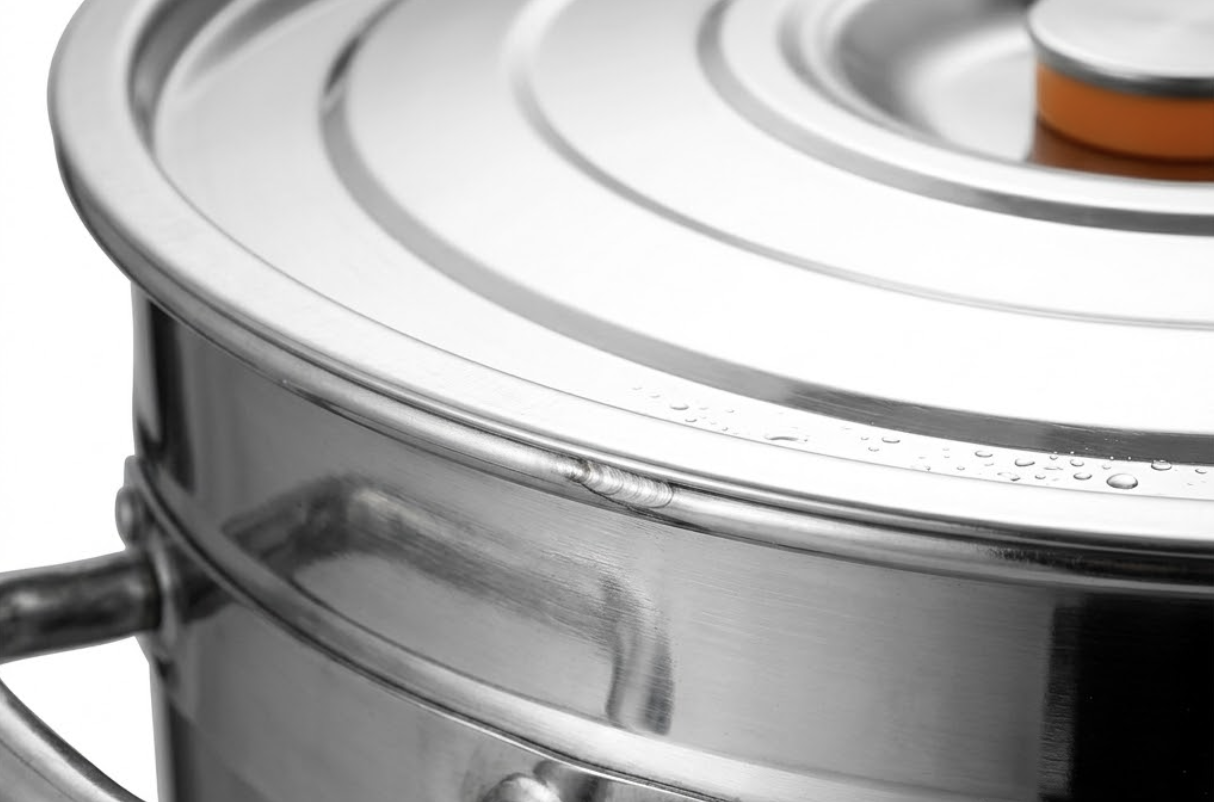
A high-performance soup pot achieves superior thermal retention through a precision-engineered, extra-thick single-wall construction. The increased wall thickness functions as a thermal buffer, slowing the rate of heat transfer from the inner cooking surface to the exterior environment. The outcome is significantly extended heat retention compared with standard thin-gauge designs. For hotel kitchens managing buffet lines or extended banquet operations, that thermal retention cuts reheating frequency, reduces energy costs, and preserves broth consistency across service periods. The 3.0 Series Stock Pot from Chuangfa (Chaozhou Chao'an District Hongfa Hardware Industrial Co., Ltd.) illustrates this category clearly — a commercial-grade stainless steel soup pot engineered for daily high-volume kitchen environments. Critically, not all thick-wall construction performs equally. The determining factor is wall thickness uniformity. Uneven gauge distribution creates localized weak points that reduce overall thermal performance and accelerate mechanical wear during repeated heating cycles. Procurement teams should treat consistent wall thickness as a primary evaluation criterion, not a footnote in product descriptions.
Q2: How Can Buyers Verify Insulation Performance Before Placing a Full Production Order?
Verifying thermal retention performance does not require a laboratory setup. A practical test involves filling the pot with water at 90 degrees Celsius, sealing it with a fitted lid, and measuring temperature at 30-minute and 60-minute intervals under ambient conditions of around 20 to 22 degrees Celsius. A well-constructed heavy-gauge pot retains above 70 degrees Celsius at the 60-minute mark. Beyond this field test, sourcing teams should request die cross-section drawings to confirm wall thickness uniformity across the full pot body. Weld integrity at rim and handle attachment points also merits close inspection. These joints absorb the highest thermal stress and represent the most frequent structural failure zone in extremely thick cookware under extended use.
Chuangfa manages cold-rolled coil processing as part of its own production infrastructure. Wall thickness consistency therefore develops at the raw material stage — not as a corrective step during finishing. This upstream discipline gives procurement teams a more dependable foundation for batch-to-batch dimensional stability, which is particularly important for hospitality accounts placing repeat orders across multiple seasons.
Q3: What Steel Grade Should Commercial Soup Pots Use, and How Do Buyers Distinguish Between Grades?
Grade 304 stainless steel carries approximately 18% chromium and 8% nickel by composition. This alloy structure delivers reliable resistance to corrosion from acidic food contents, saline broths, and commercial-grade detergents used in industrial dishwashing systems. Grade 201 substitutes manganese for nickel, reducing material cost but also reducing corrosion resistance measurably. For soup pots holding salt-based broths through extended service periods, this performance gap becomes visible within months of regular use. A simplified field screening method helps buyers conduct a first-pass check: a drop of diluted hydrochloric acid on 201 steel produces visible surface discoloration within minutes, while grade 304 resists the reaction. This check supplements — rather than replaces — formal XRF spectrometry during supplier qualification. Chuangfa's soup pot range includes both 201 and 304 grade options, allowing buyers to align material selection with end-use context and the compliance standards of their target export market.
Q4: What Does Genuine OEM Capability Look Like, and How Does It Differ From Catalog Reselling?
The gap between authentic OEM manufacturing and catalog reselling carries real procurement consequences. Genuine OEM capability means adjusting tooling at the die level — modifying pot depth, wall thickness, handle geometry, or lid profile to satisfy a specific operational requirement. Catalog resellers apply branding to existing standard stock without modifying the underlying tooling. The clearest signal of real OEM capability is a structured, milestone-based production process with documented handoffs at each stage. Chaozhou Chao'an District Hongfa Hardware Industrial Co., Ltd. follows a seven-step OEM workflow: requirement submission, sample mapping, requirement confirmation, contract signing, proofing production, quality inspection, and shipment. For procurement managers overseeing venue-specific configurations — such as hospital nutrition services requiring sealed lids with precise handle clearances, or hotel banquet operations needing stackable format compatibility — this tooling flexibility directly determines whether a manufacturer can genuinely serve the account or only approximate its requirements. The company's product portfolio spans over 200 series and nearly 2,000 individual items, reflecting ongoing die investment rather than a static third-party catalog.
Q5: How Does Vertical Integration Affect Consistency Across Repeat Orders?
Batch-to-batch consistency is a frequently overlooked procurement risk in cross-border sourcing. Factories relying on spot market coil suppliers introduce material variability between production runs. Wall thickness, surface texture, and alloy composition can all shift between orders — sometimes remaining undetected until post-delivery quality checks reveal the discrepancy. A vertically integrated manufacturer processes its own raw coil, maintaining material traceability through every production batch. Buyers can then request coil batch records linked to specific shipment references, building an auditable material history across the supply relationship. Chuangfa operates six dedicated production lines within a 100,000-square-metre facility in Caitang Town, Chaozhou. Production scope covers cold-rolled steel coil, wire drawing, mould heat treatment, industrial furnace components, and finished kitchenware. This structure places raw material input and finished export product under a single accountability framework — eliminating the quality variables that accumulate across multi-supplier networks.
Q6: What Should Procurement Managers Confirm Before Approving a Soup Pot Manufacturer?
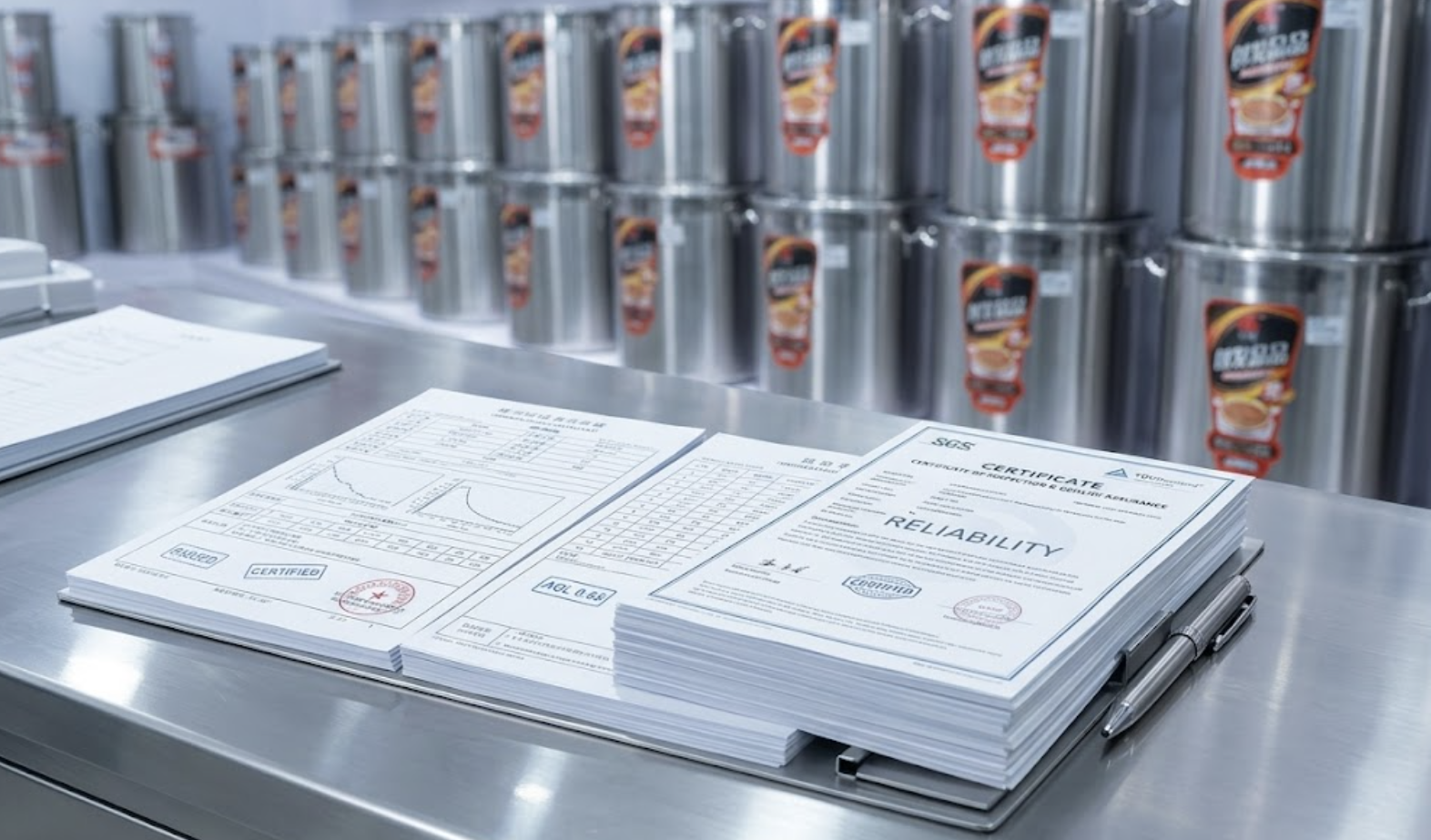
A structured pre-approval checklist creates a consistent comparison basis across supplier candidates. Verification priorities include: mill certificate traceability linked to specific coil batches for the ordered steel grade; equipment audit confirming press tonnage and in-house die-making capacity; third-party thermal retention testing on production-run samples rather than pre-selected showroom units; written production timeline with defined milestone dates; interior surface finish specifications aligned with food-contact compliance in the target export market; and export documentation accuracy, including HS code classification history for stainless steel cookware. These questions are not exhaustive, but they address the structural variables that determine supplier reliability at scale — a sound starting point before entering formal qualification discussions. Chuangfa's OEM documentation and one-stop service framework — spanning production management, packaging, logistics coordination, and shipment — positions this checklist as an internally manageable process rather than a multi-vendor coordination effort.
A manufacturer earns the designation of reliable extremely thick soup pot supplier through production transparency, material traceability, and process consistency — not through catalog depth or unit pricing alone. The framework above gives procurement teams a structured, repeatable method for distinguishing vertically integrated manufacturers from intermediaries presenting identical-looking products. Sourcing teams looking to review specifications, OEM capability documentation, or factory details for Chuangfa (Chaozhou Chao'an District Hongfa Hardware Industrial Co., Ltd.) can access further information at https://en.hongfasteel.com/.
Hongfa Hardware Industrial Co., Ltd.
Hongfa Hardware Industrial Co., Ltd.
15918938056
email us here
Legal Disclaimer:
EIN Presswire provides this news content "as is" without warranty of any kind. We do not accept any responsibility or liability for the accuracy, content, images, videos, licenses, completeness, legality, or reliability of the information contained in this article. If you have any complaints or copyright issues related to this article, kindly contact the author above.
