

Hyaluronic Acid (HA): Core Multifunctional ECM Bioactive Molecule— Cloud-Clone ELISA Kits Enable Accurate Quantification

Overcoming analytical hurdles for high-quality HA measurement across fibrosis, oncology, dermatology and biomaterial research
HUSTON, TX, UNITED STATES, September 10, 2026 /EINPresswire.com/ -- Hyaluronic Acid (HA): Core Multifunctional ECM Bioactive Molecule— Cloud-Clone ELISA Kits Enable Accurate Quantification
Overcoming analytical hurdles for high-quality HA measurement across fibrosis, oncology, dermatology and biomaterial research
Hyaluronic Acid (HA), also widely known as hyaluronan, is a natural linear glycosaminoglycan with exceptional water-retention, viscoelastic and biocompatible properties. It spans clinical medicine, aesthetic dermatology, pharmaceutical development and tissue-engineering research. Nevertheless, HA quantification remains experimentally challenging: this large polysaccharide is prone to enzymatic degradation ex-vivo and suffers cross-reactivity from structurally similar glycosaminoglycans present in complex biological matrices. Cloud-Clone has developed a specialised ELISA kit system addressing these technical barriers to deliver consistent, reliable HA data for global life-science investigators.
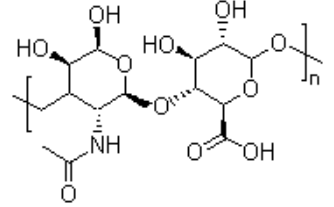
Figure 1 The chemical structural formula of Hyaluronic Acid (HA)
Occurring naturally across animal and plant tissues, HA supports a broad spectrum of applications.
Within clinical medicine, HA serves both as a diagnostic biomarker and a therapeutic agent. Circulating and tissue-resident HA levels act as critical read-outs for staging hepatic, pulmonary and renal interstitial fibrosis. It also helps assess severity in rheumatoid arthritis, osteoarthritis and chronic wound disorders. As a medical preparation, high-purity HA is injected intra-articularly for joint lubrication and cartilage protection; it functions as ophthalmic viscoelastic material during eye surgery. HA-based medical dressings and anti-adhesion products facilitate post-surgical wound repair, inhibit tissue adhesion and support chronic-ulcer healing across orthopaedics, gastroenterology, ophthalmology and surgical disciplines.
For skincare and skin-health applications, HA is well-recognised for superior water-binding capacity. High-molecular-weight HA forms a breathable surface film for skin protection; medium-molecular-weight HA moisturises stratum-corneum layers to relieve dryness; low-molecular-weight HA penetrates the dermis to modulate cellular metabolism and tissue repair. These variants are broadly incorporated into toners, serums, masks and emulsions for moisturisation, anti-ageing, soothing and barrier-recovery purposes. HA also represents a staple raw material for aesthetic soft-tissue filler products.
In biotechnology and tissue-engineering fields, HA’s favourable biocompatibility, degradability and cell-affinity make it a frequent building block for cell-culture scaffolds, delivery carriers and sustained-release matrices. HA-derived 3D scaffolds mimic native extracellular-matrix microenvironments for stem-cell culture, tissue reconstruction and organ-repair studies. Leveraging HA’s specific binding affinity toward CD44 receptors, targeted drug-delivery systems can enhance drug accumulation within tumour and inflammatory lesions.
For fundamental research, HA modulates cell proliferation, migration, inflammatory response and signal transduction. Dysregulated HA metabolism contributes to fibrosis, autoimmune conditions, tumour metastasis and degenerative disorders, rendering HA a widely studied target within cell biology, pathology, oncology and pharmacology.
HA biosynthesis is catalysed by the HAS-enzyme family, including three mammalian isoforms HAS1, HAS2 and HAS3 generating HA molecules of distinct molecular sizes and functional profiles. Newly synthesised HA is translocated across cell membranes into the extracellular space to form hydrated elastic networks. In-vivo HA turnover relies upon hyaluronidases and reactive-oxygen-species-mediated breakdown, degrading large-size HA into intermediate and short fragments. Degraded fragments are partly recycled intracellularly; residual fractions enter lymphatic and blood circulation for hepatic and splenic clearance, with minor excretion via urine. Under physiological conditions, synthesis and degradation remain dynamically balanced. Disturbed equilibrium leads to abnormal tissue accumulation or altered fragment profiles, driving pathological changes.
Biological functions of HA strongly depend on molecular weight. High-molecular-weight HA provides physical support, lubrication and barrier defence, shielding joints, skin and interstitial tissues. Medium- and low-molecular-weight HA bind cell-surface receptors such as CD44 and RHAMM to regulate cell adhesion, migration, proliferation, differentiation, chemotaxis and angiogenesis. Excessively short HA fragments can trigger pro-inflammatory signalling and exacerbate local inflammation and tissue remodelling.
Analytically, HA presents notable obstacles. As a water-soluble macromolecular polysaccharide, HA undergoes rapid degradation ex-vivo mediated by endogenous hyaluronidases and glycosidases. Elevated temperature, repeated freeze-thaw cycles and pH shifts accelerate chain fragmentation and under-estimated assay results. Biological samples contain structurally related glycosaminoglycans including chondroitin sulphate, keratan sulphate and dermatan sulphate, which create cross-reactivity risks. Test matrices such as serum, plasma, synovial fluid, tissue homogenates, cell-culture supernatants and wound exudates contain abundant proteins, lipids and cellular debris, further increasing non-specific binding and complicating precise HA quantification.
Dysregulated HA metabolism is tightly linked to disease progression. During chronic organ injury, activated stellate cells and fibroblasts overproduce HA, which accumulates heavily within interstitium and serves as a robust biomarker for hepatic, pulmonary and renal fibrosis. In osteoarthritis and rheumatoid arthritis, synovial HA content drops and polymer chains shorten, impairing joint lubrication and aggravating cartilage damage. Skin ageing, trauma and UV exposure deplete dermal HA, causing dryness, laxity and impaired wound closure. Tumour microenvironments frequently show excessive HA deposition that facilitates cancer-cell invasion and metastatic spread. HA concentrations and fragment profiles also offer mechanistic insights for post-surgical adhesion, ocular-surface disorders and mucosal-injury research.
HA has become an indispensable biomarker for fibrosis-mechanism dissection, osteoarthritis-model characterisation, skin-injury and wound-healing investigations, tumour-metastasis studies, functional-material development and targeted-drug screening. Accurate measurement of HA concentration and metabolic shifts provides essential support for cell assays, in-vivo disease modelling, drug-efficacy evaluation and scientific publication.
Comparison of mainstream detection technologies and key experimental bottlenecks
HA’s nature as a large polysaccharide brings multiple analytical challenges. Major detection approaches differ substantially in sensitivity, specificity, labour input, throughput and running cost.
1.Gel Permeation Chromatography (GPC) GPC separates HA species according to molecular size and enables molecular-weight-distribution profiling. It delivers reliable fraction resolution for polysaccharide characterisation. Drawbacks include high instrument and maintenance expenditure, complex sample pre-treatment, long run-time and very limited throughput. GPC is suitable only for small-batch reference-material analysis rather than routine high-volume animal-study or drug-screening workflows.
2.Liquid Chromatography-Tandem Mass Spectrometry (LC-MS/MS) LC-MS/MS achieves high specificity by detecting signature HA degradation fragments and delivers authoritative qualitative and quantitative outputs. Nonetheless, high equipment costs, complex maintenance demands, specialised operator requirements and low throughput prevent broad adoption by most standard laboratories for routine large-sample testing.
3.Colorimetric biochemical assays Colorimetric methods rely on uronic-acid-based colour reactions, require basic equipment and carry low per-test cost. However, specificity is poor; diverse polysaccharides and reducing substances generate non-specific colour development. Reproducibility and quantitative accuracy are insufficient for rigorous academic research requirements, and this method is limited to preliminary qualitative screening.
4.Enzyme-Linked Immunosorbent Assay (ELISA) ELISA represents the preferred workflow for basic research. Only standard microplate-readers are required; sample pre-treatment is minimal, throughput is high and overall cost-efficiency is favourable. ELISA works compatibly with serum, synovial fluid, tissue homogenates, cell-culture supernatants and wound exudates for animal modelling, cell-based intervention and drug-screening projects. Even so, generic commercial HA ELISA kits frequently suffer critical limitations: lack of enzymatic-inhibition and anti-degradation components leading to analyte loss; inadequate ligand-antibody specificity causing cross-reactivity with homologous glycosaminoglycans; insufficient sensitivity for capturing subtle HA concentration changes during early-stage disease or low-dose drug intervention. These issues contribute to data distortion, insignificant inter-group differences and poor replicate consistency.
Four recurrent experimental pain-points complicate HA quantification:
Endogenous enzymatic degradation: Hyaluronidases and glycosidases within biological specimens break HA polysaccharide chains during collection, storage and incubation, yielding artificially low readings without protective buffer systems.
Cross-reactivity from homologous glycosaminoglycans: Chondroitin sulphate, keratan sulphate and dermatan sulphate trigger non-specific signals and false-positive outcomes.
Difficulty capturing minor concentration shifts: Small-magnitude HA changes under early-disease or mild-treatment conditions demand high-assay sensitivity to generate statistically meaningful comparisons.
Complex sample-matrix interference: Abundant proteins, lipids and particulate contaminants drive non-specific interactions, increasing data dispersion and deteriorating experimental reproducibility.
Differentiated technical strengths of Cloud-Clone HA ELISA Kit
Cloud-Clone has developed a high-performance HA ELISA kit addressing degradation risks, glycosaminoglycan cross-interference and matrix-related obstacles. Optimisations span recognition-ligand design, anti-degradation buffer formulation, signal-amplification chemistry and anti-interference engineering.
3.1 High-specificity recognition system mitigating homologous-substance cross-interference The kit utilises recognition components targeting HA-specific spatial epitopes. Validated testing shows negligible cross-reactivity against chondroitin sulphate, keratan sulphate, dermatan sulphate and related polysaccharide metabolites, eliminating false-positive signals originating from structurally similar molecules.
3.2 Proprietary enzyme-inhibition and anti-degradation system preserving macromolecular integrity Custom-formulated buffers suppress hyaluronidase and glycosidase activity, while optimised pH and ionic conditions stabilise high-molecular-weight HA throughout sample dilution and incubation steps. This minimises analyte loss and batch-to-batch measurement variation caused by polysaccharide breakdown.
3.3 High-sensitivity performance paired with broad linear range Improved solid-phase coating and enzyme-driven signal-amplification enhance detection sensitivity to capture subtle HA variations under physiological baseline, early-pathology and drug-intervention conditions. A wide quantitative linear window covers both low physiological and elevated pathological HA levels, reducing errors introduced by repeated sample dilution.
3.4 Multi-species and multi-matrix compatibility with standardised high-throughput workflows Compatible with common laboratory animal species, the kit supports serum, plasma, synovial fluid, skin / liver / lung tissue homogenates, cell-culture supernatants and wound exudates. No complex extraction or chromatographic purification is needed; samples are simply centrifuged and diluted before loading. Assays finish within three hours using detachable 96-well plates with pre-formulated ready-to-use reagents. The platform fits small-scale mechanistic studies as well as large-animal-cohort and high-volume drug-screening programmes with stable inter-batch performance.
Core research-application scenarios
Cloud-Clone HA ELISA kits are widely applied across fibrosis, osteoarthritis, dermatology, oncology, regenerative medicine and pharmacology research.
4.1 Mechanistic studies of organ fibrosis In hepatic, pulmonary and renal interstitial-fibrosis animal and cell-activation models, HA levels within tissues and serum are quantified alongside fibrosis-associated mediators to characterise links between HA deposition and disease progression, supporting anti-fibrotic target discovery.
4.2 Osteoarthritis-related research For osteoarthritis, rheumatoid-arthritis and joint-injury models, HA concentrations in synovial fluid, serum and cartilage tissue are measured to dissect how disturbed HA metabolism modulates joint lubrication, cartilage protection and inflammatory progression, and to evaluate novel intervention strategies.
4.3 Skin-biology and wound-healing research Under skin-ageing, UV-damage, trauma and chronic-ulcer experimental settings, HA levels in skin tissue and wound exudates are quantified to explore connections between HA loss / fragment imbalance, skin deterioration and delayed wound repair. It supports bioactive-agent, medical-dressing and skincare-related mechanism and product-development work.
4.4 Tumour-invasion and-metastasis research Assessing HA abundance in tumour tissues and peripheral serum helps clarify how tumour-microenvironment HA modulates cancer-cell adhesion, migration and invasion, furnishing experimental evidence for oncological-mechanism investigation and anti-tumour-drug development.
4.5 Targeted-drug screening and pharmacodynamic assessment The kit enables high-throughput screening and efficacy evaluation for anti-fibrotic, joint-protective, wound-repair-promoting and anti-metastatic agents, including small-molecule compounds and herbal preparations. HA read-outs help characterise drug effects upon HA synthesis, degradation and tissue deposition and inform optimal-dose determination.
4.6 Tissue-engineering and biomaterial research HA quantification within surrounding tissues and culture media after biomaterial implantation assesses how scaffolds or prosthetic devices reshape local microenvironments and cellular behaviour, providing analytical support for novel medical-biomaterial validation.
Figure 2 Core research-application scenarios of HA
As a signature multifunctional glycosaminoglycan of the extracellular matrix, HA exerts physical-structural, lubricative and signalling functions strongly governed by molecular-weight profiles. Disrupted HA synthesis-degradation homeostasis represents a key pathological driver for organ fibrosis, joint disorders, skin damage and tumour metastasis.
HA measurement is hampered by intrinsic technical hurdles: rapid enzymatic degradation ex-vivo, cross-reactivity from homologous glycosaminoglycans and complex sample matrices. Conventional GPC, LC-MS/MS and colorimetric workflows suffer from high-instrument barriers, low throughput or insufficient specificity. Ordinary ELISA products often lack stability, anti-interference capacity and sensitivity. Cloud-Clone HA ELISA integrates high-specificity recognition reagents, proprietary enzyme-inhibiting stabilising buffers, enhanced signal-amplification and matrix-tolerant formulations to resolve major HA-assay pain-points.
Covering fibrosis, joint-disease, skin-repair, oncology, drug-screening and biomaterial-research use-cases, this assay delivers precise, reproducible quantitative outputs to advance global life-science, basic-medical and translational-medical investigations. Cloud-Clone will continue advancing assay solutions for polysaccharide biomarkers, extracellular-matrix components and inflammatory mediators to expand the reagent portfolio for biomedical-research communities worldwide.
About Cloud-Clone Corp.
Cloud-Clone Corp. is dedicated to the development and production of high-quality immunoassay reagents and detection solutions. With a focus on antibody engineering, multiplex assay development, and cross-platform compatibility, the company provides research tools designed to support precision medicine and advanced biomedical investigation globally. Our core products and services include the research and development of proteins, antibodies, ELISA kits, primary cells, and multiplex cytokine assay kits, as well as professional CRO services to fully meet the diverse needs of biomedical research and related fields.
For more information about Cloud-Clone Corp, visit www.cloud-clone.com.
CLOUD-CLONE CORP.(CCC)
Tel: 001-832-538-0970, 0086-27-8425-9552
Email: mail@cloud-clone.com, sales@cloud-clone.us
Visit us on social media:
LinkedIn: https://www.linkedin.com/company/cloud-clone-corp/
Instagram: https://www.instagram.com/cloudclonecorp2023/
TickTok: https://www.tiktok.com/@cloudclonecorp2026
SuKi Duan
CLOUD-CLONE CORP.WUHAN
email us here
Visit us on social media:
LinkedIn
Instagram
TikTok
X
Legal Disclaimer:
EIN Presswire provides this news content "as is" without warranty of any kind. We do not accept any responsibility or liability for the accuracy, content, images, videos, licenses, completeness, legality, or reliability of the information contained in this article. If you have any complaints or copyright issues related to this article, kindly contact the author above.
