

Integrated Manufacturing Gains Importance in Global OEM Sourcing

Jyoti World's integrated manufacturing capabilities connect polymer compounding, tooling, injection moulding, CNC plastic machining, assembly and quality inspection to support OEM component manufacturing.
Ecovadis Sustainability Rating
Integrated Management System - ISO
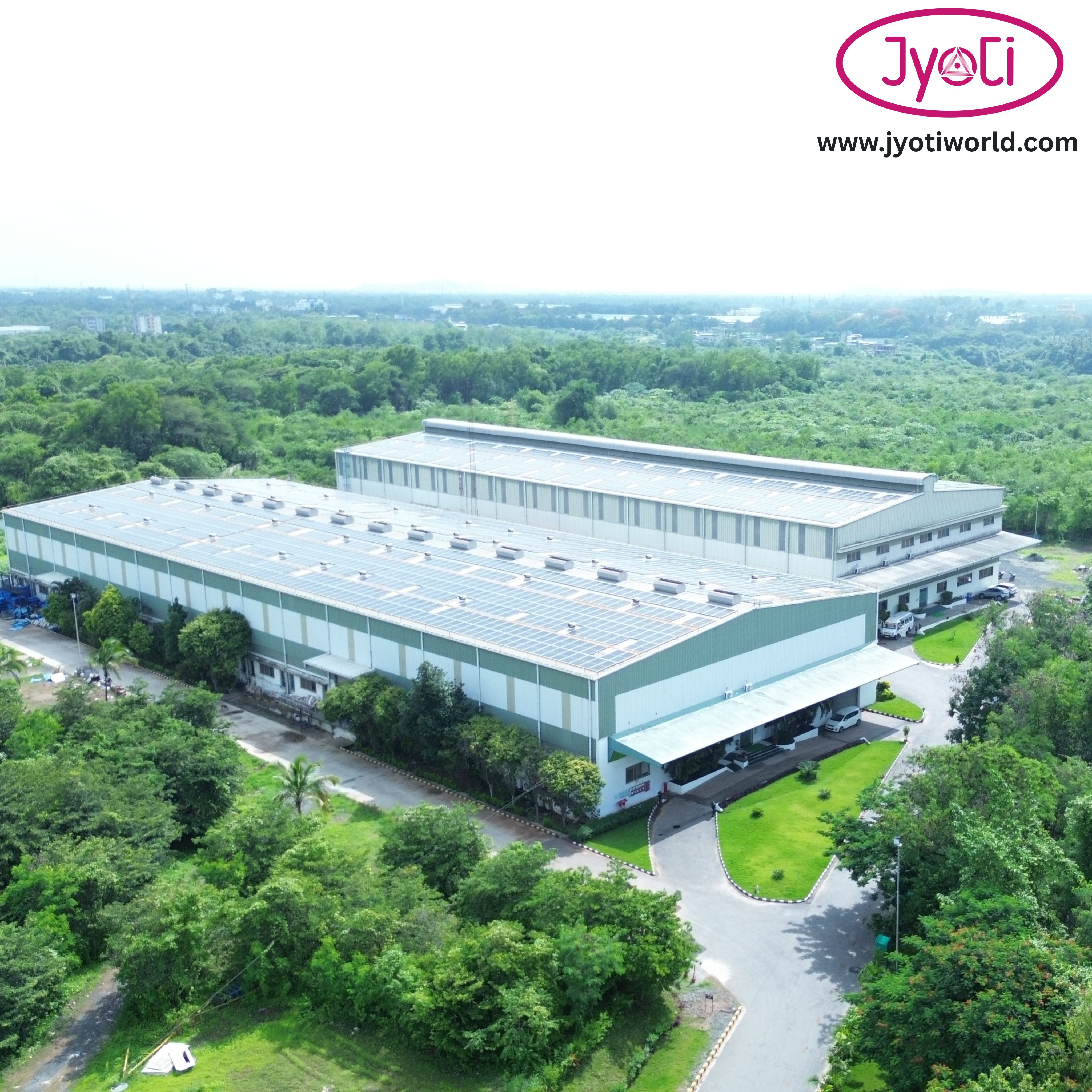
Jyoti World Plant Top View
MSME ZED Gold Certification
As supply chains evolve, OEMs are prioritising connected manufacturing, supplier accountability, quality control and sourcing resilience.
MUMBAI, MAHARASHTRA, INDIA, October 30, 2026 /EINPresswire.com/ -- For global original equipment manufacturers (OEMs), sourcing a plastic component increasingly involves more than identifying a supplier with the required machine capacity. Material selection, product engineering, tooling, molding, machining, finishing, and assembly can all influence the final component's performance, quality, cost, and delivery.
As manufacturers reassess their global sourcing strategies, the ability to coordinate these interconnected activities is becoming an important consideration. An integrated manufacturing approach brings multiple stages of component development and production under one coordinated framework, helping OEMs manage technical interfaces, improve process visibility and establish clearer accountability.
The shift is not simply about reducing suppliers. It is about building manufacturing relationships that can support product development, production consistency, supply continuity, and the changing requirements of global markets.
Global Supply Chains Are Being Reconfigured:
Global manufacturing still depends on interconnected international supply chains. However, recent disruptions, geopolitical uncertainty, changing trade policies, logistics challenges and evolving customer expectations have encouraged manufacturers to review how their supply networks are structured.
The focus is increasingly on resilience, flexibility, supplier visibility, and the ability to respond to changes in demand or supply conditions. OEMs are evaluating sourcing decisions not only on purchase price, but also on supply reliability, quality consistency, technical responsiveness, lead times, and the total cost of managing a component throughout its lifecycle.
This is encouraging manufacturers to look more closely at the relationships between suppliers involved in producing a finished component. When material development, tooling, molding, and secondary operations are managed independently, coordination gaps can arise. These may affect development timelines, dimensional consistency, quality ownership and the resolution of production issues.
An integrated manufacturing partner can help address these challenges by coordinating technically dependent processes and providing a more connected route from material and design decisions to the finished component.
Why Integration Matters in Plastic Component Manufacturing:
Plastic component manufacturing involves several interdependent decisions. The selected polymer influences tooling considerations and processing parameters. Component geometry affects mould design, cooling, shrinkage, and dimensional stability. Secondary machining, welding, printing or assembly may introduce further quality and coordination requirements.
When these activities are planned independently, changes at one stage can complicate another. For example, a material change may affect shrinkage and processing behavior, while a design modification may require tooling adjustments or changes to the molding process.
An integrated approach lets teams consider these dependencies earlier in the development cycle.
For OEMs, the potential advantages include:
- Better coordination: Material selection, product design, tooling, and production can be evaluated together rather than through disconnected supplier interactions.
- Improved quality ownership: Clearer process responsibility can support problem identification, corrective action, and quality consistency.
- More efficient development: Technical discussions and design-for-manufacturing reviews can take place across connected functions.
- Greater process visibility: A coordinated manufacturing route can make it easier to monitor development milestones, production status, and quality requirements.
- Supply-chain continuity: Fewer operational hand-offs may simplify coordination and help manage dependencies between manufacturing stages.
- Value engineering opportunities: Material, tooling, component design and secondary operations can be assessed together to identify potential improvements in total manufacturing cost.
These benefits depend on the manufacturing partner's actual capabilities, process controls, and quality systems. Integration alone does not guarantee lower costs or better performance; it creates the framework for evaluating and achieving these outcomes.
From Polymer Selection to Finished Component:
For engineered plastic components, material and process decisions are closely connected.
A component intended for electrical equipment, fluid-handling systems, industrial machinery or other demanding applications may require specific mechanical, thermal, chemical, dimensional or electrical properties. Selecting a suitable polymer is therefore only one part of the engineering process.
Custom polymer compounding can help develop material characteristics for particular applications. Tooling and mould design must then accommodate the selected material and component geometry. Injection molding parameters must be developed and controlled to achieve the required dimensions and repeatability.
Depending on the component, further operations such as CNC plastic machining, welding, printing, finishing and assembly may be necessary before the part is ready for integration into the customer's product.
Bringing these capabilities together can create a more coordinated manufacturing pathway. It can also support discussions around metal-to-plastic conversion, component consolidation and design optimization, where the technical and commercial suitability of an alternative material or manufacturing route needs to be assessed.
India as a Manufacturing and Sourcing Partner:
India's manufacturing ecosystem is attracting attention as international businesses evaluate sourcing diversification, regional supply-chain partnerships and additional manufacturing capacity.
The India–United Kingdom Comprehensive Economic and Trade Agreement (CETA), which entered into force on July 15, 2026, provides a new framework for bilateral trade and economic cooperation. Its implementation creates an additional context for Indian and British businesses to explore trade and manufacturing relationships, subject to the agreement's product-specific provisions and rules of origin.
In the United Arab Emirates, the government's Operation 300Bn strategy aims to increase the industrial sector's contribution to GDP to AED 300 billion by 2031. The strategy identifies plastics, machinery, electrical appliances, and other manufacturing activities among its priority areas, while promoting local industrial development and supply-chain capabilities.
These developments reflect the broader importance of manufacturing partnerships, industrial capabilities and trade connectivity. For international OEMs evaluating suppliers in India, the opportunity extends beyond sourcing individual components. It can also involve engaging manufacturing partners that support material engineering, tooling, production, and value-added operations.
Integrated Manufacturing at Jyoti World:
Established in 1959, Jyoti World Private Limited is an Indian plastics engineering and manufacturing company with capabilities spanning polymer compounding, injection molding, profile extrusion, plastic machining, tooling, and value-added assembly.
The company's injection molding infrastructure covers machine capacities from 60 tonnes to 1,200 tonnes, supporting a range of component sizes and application requirements. Its capabilities also include mono-, twin- and tri-layer profile extrusion, custom polymer compounding, in-house tool-room support, product development and secondary manufacturing operations.
The combination of these capabilities enables Jyoti World to support multiple stages of plastic component development and manufacturing. Depending on project requirements, this can include material evaluation, tooling coordination, molding, machining and assembly.
For OEMs, this integrated approach offers the opportunity to work with a manufacturing partner that considers the relationship between material, process, and finished-component requirements rather than treating each operation as an isolated activity.
The company's quality framework includes ISO 9001, ISO 14001 and ISO 45001 certifications. Jyoti World has also received an EcoVadis Bronze Rating and MSME Sustainable (ZED) Gold Certification, reflecting its focus on quality systems and responsible manufacturing practices.
"Integrated manufacturing is about connecting processes that are technically dependent on each other while maintaining clearer accountability," said Dr. Raju Desai, Chairman & Managing Director of Jyoti World. "When material engineering, tooling, molding, and secondary operations are considered together, manufacturers can address challenges earlier and build a more coordinated route to consistent component production."
Evaluating the Right Manufacturing Partnership:
For OEMs considering an integrated manufacturing partner, the evaluation should extend beyond the supplier's equipment list. Relevant considerations include material expertise, engineering and tooling support, manufacturing capacity, process validation, quality systems, traceability, intellectual property protection, production scalability, and export experience.
Understanding a component's end-use requirements and translating them into a controlled manufacturing process is particularly important. Buyers should also assess whether the proposed manufacturing model clearly assigns responsibility for quality, delivery, and technical problem-solving.
Integrated manufacturing is not necessarily the right model for every component or every sourcing relationship. Its value is strongest where material, tooling, molding, and downstream operations have significant technical dependencies and where better coordination can improve the overall manufacturing outcome.
As global OEMs continue to review their sourcing strategies, manufacturing partners with connected engineering and production capabilities can play an important role in building responsive, accountable and resilient supply relationships.
About Jyoti World Private Limited:
Established in 1959, Jyoti World Private Limited is an Indian plastics engineering and manufacturing company offering injection molding, profile extrusion, polymer compounding, plastic machining, tooling and value-added assembly services. The company supports OEM and industrial applications through integrated material and manufacturing capabilities. Its certifications include ISO 9001, ISO 14001, and ISO 45001, along with an EcoVadis Bronze Rating and MSME Sustainable (ZED) Gold Certification.
Poorwal Oak
Jyoti World Private Limited
+91 84228 69122
poak@jyotiworld.com
Legal Disclaimer:
EIN Presswire provides this news content "as is" without warranty of any kind. We do not accept any responsibility or liability for the accuracy, content, images, videos, licenses, completeness, legality, or reliability of the information contained in this article. If you have any complaints or copyright issues related to this article, kindly contact the author above.
